LAND LAB
 

TRAILS & BRidges

C.2020

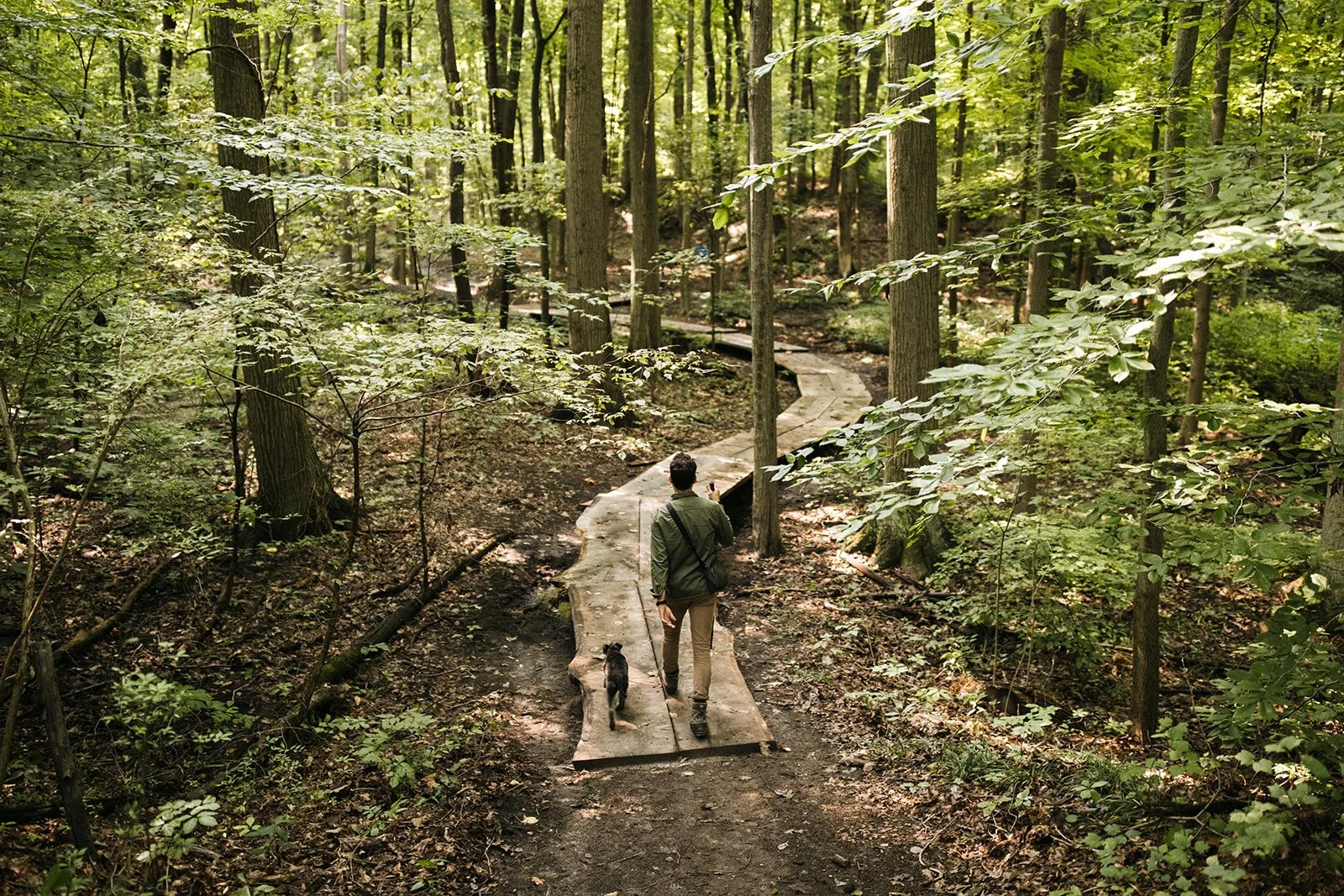
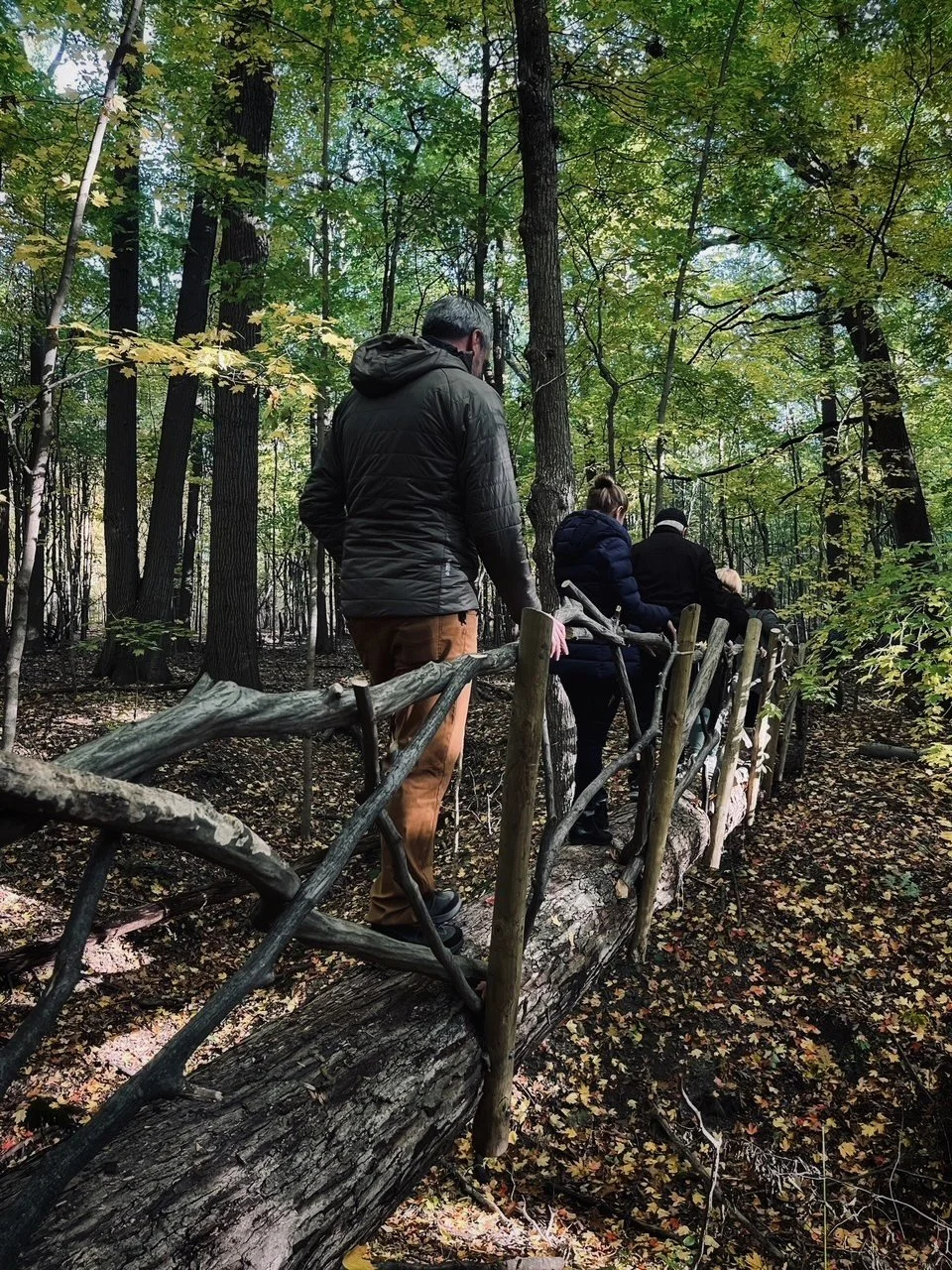
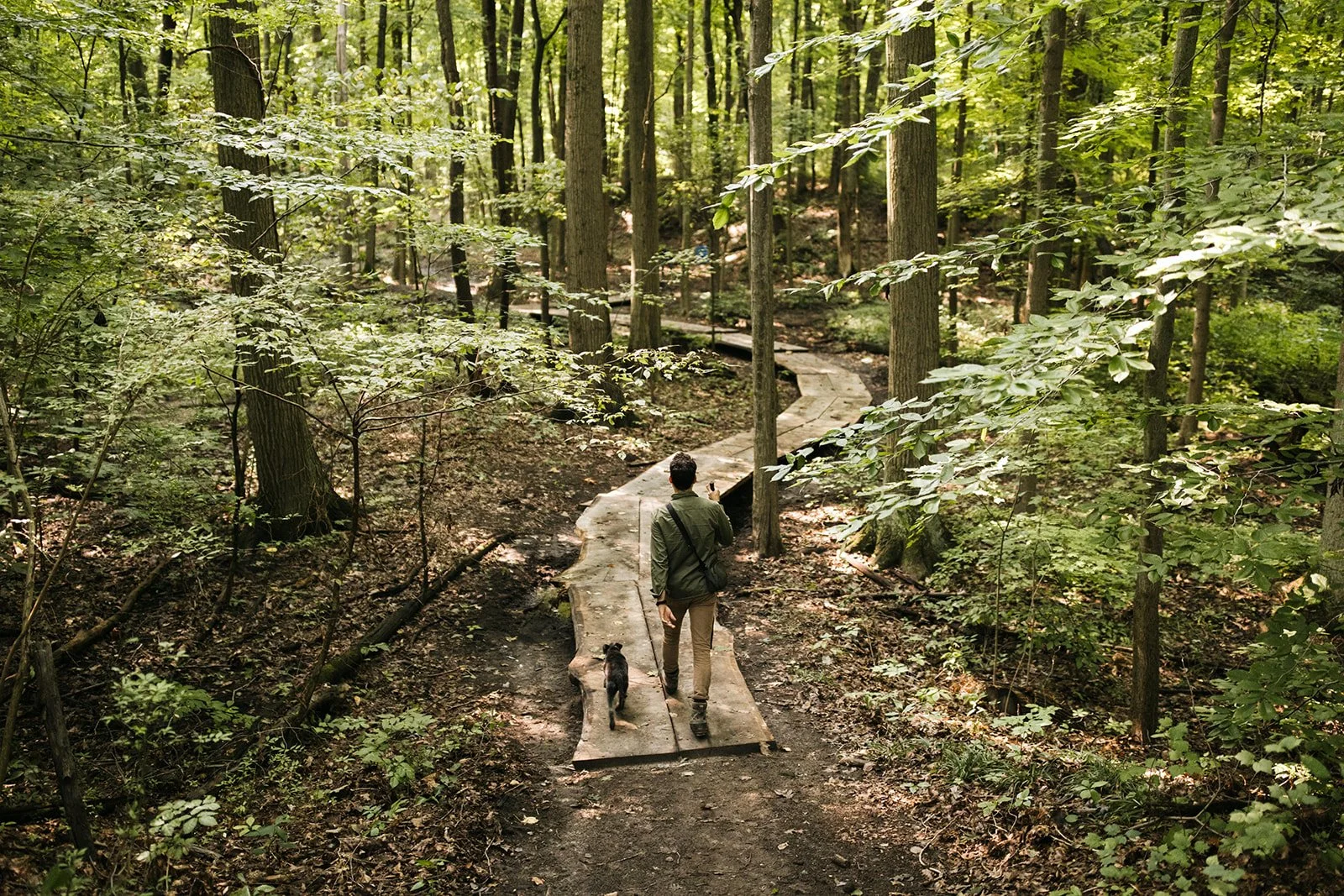
Creating and managing a trail system is undeniably a time-consuming and physically demanding endeavor, yet the rewards it brings are profound. The Joy Project has opened my eyes to the dual nature of bridge-building; this includes not only the construction of physical structures like bridges and boardwalks but also the forging of friendships and alliances with people I had never met before. It is remarkable how these two aspects interconnect. Just as boardwalks and bridges provide safe pathways for us to explore, they also play a crucial role in protecting our natural surroundings from erosion and damage. These structures allow us to immerse ourselves in the beauty of nature, offering a well-defined route to enjoy the diverse landscapes while minimizing our ecological impact.


TheJoyProject-269.jpg

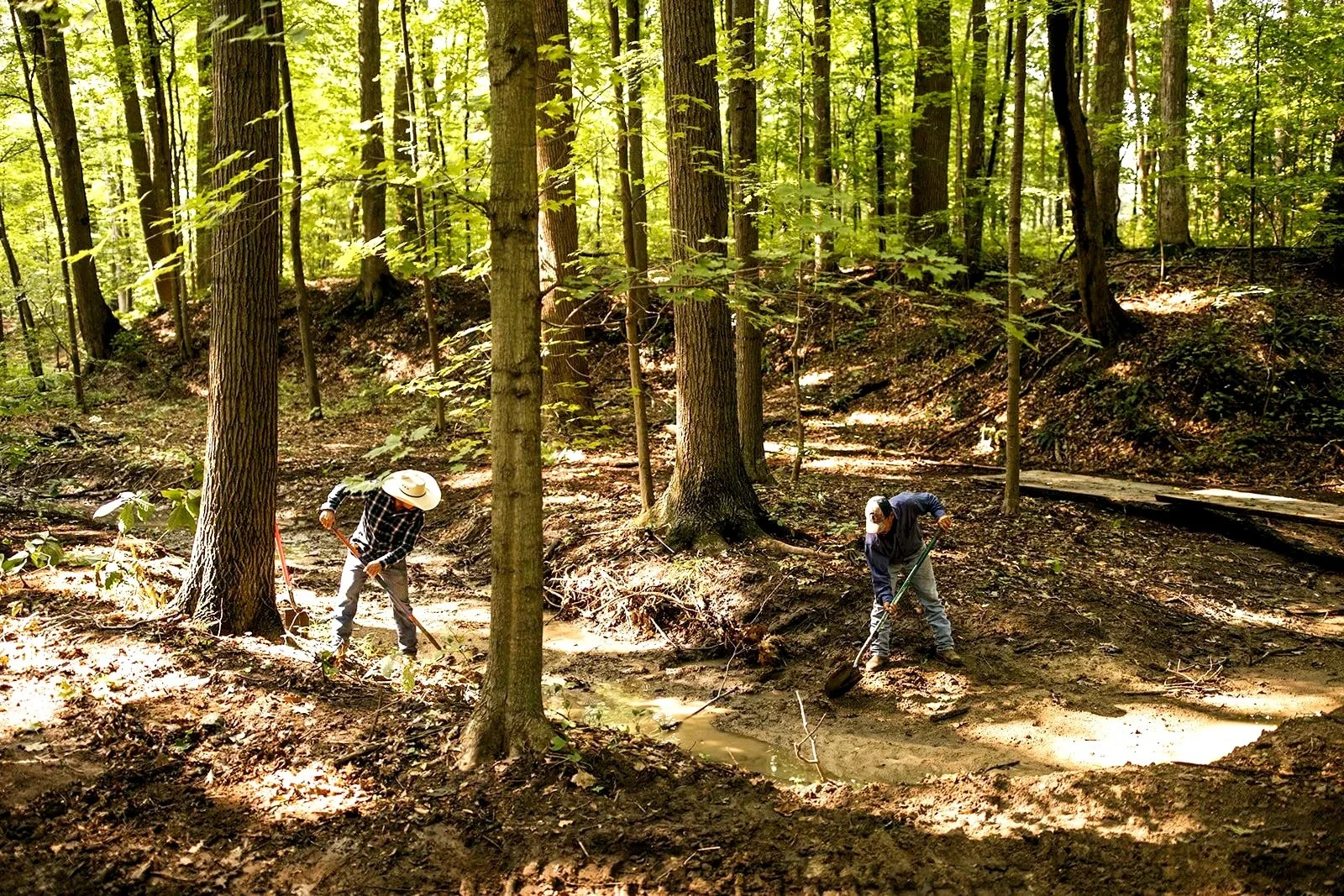
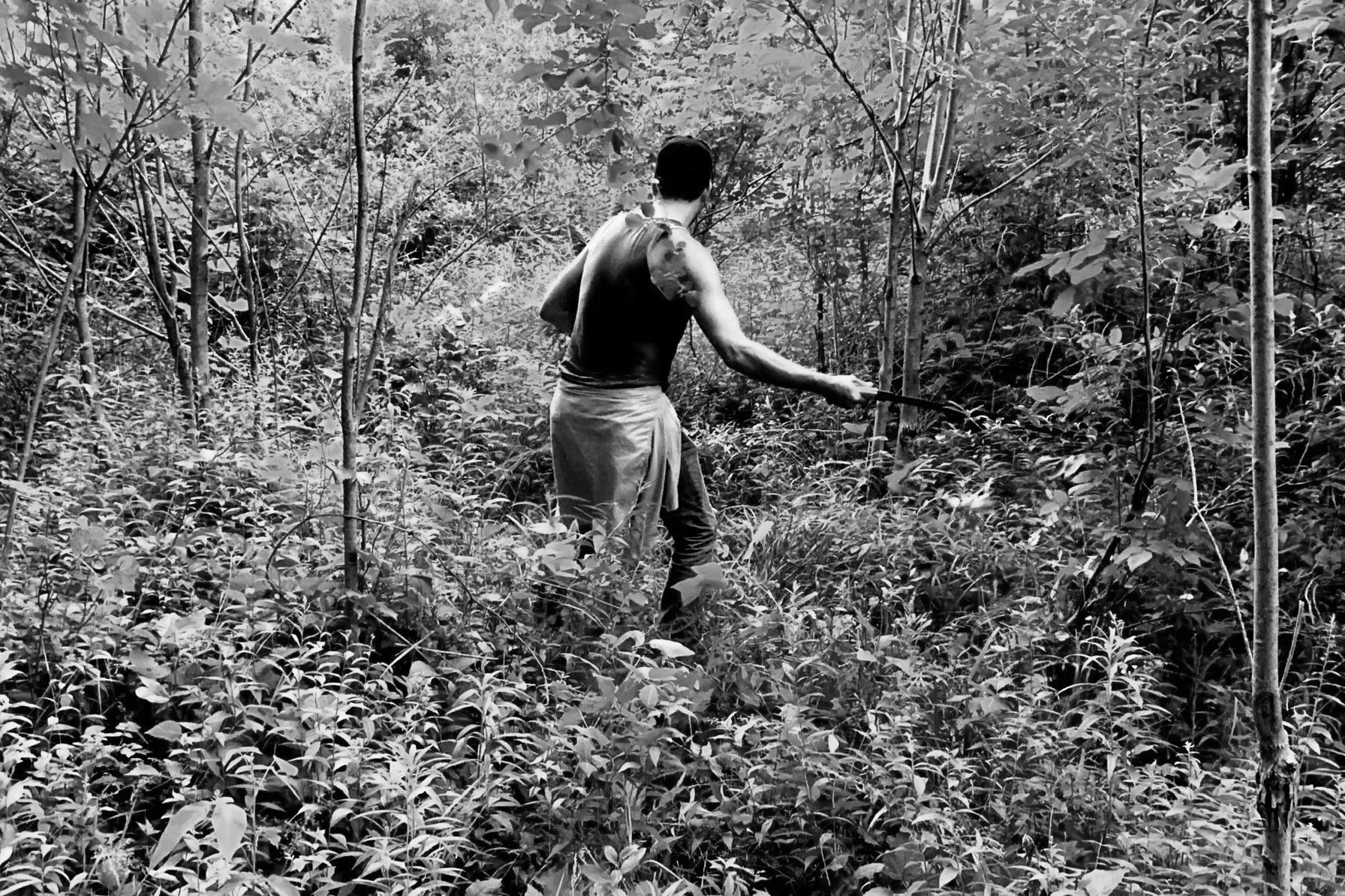
Cutting trails through a heavily wooded area is a challenging task that requires a lot of hard work and patience. Initially, we used hand tools such as machetes, axes, and saws to clear out the vegetation and create a pathway for larger equipment to access the area. This first step is known as "bushwhacking."

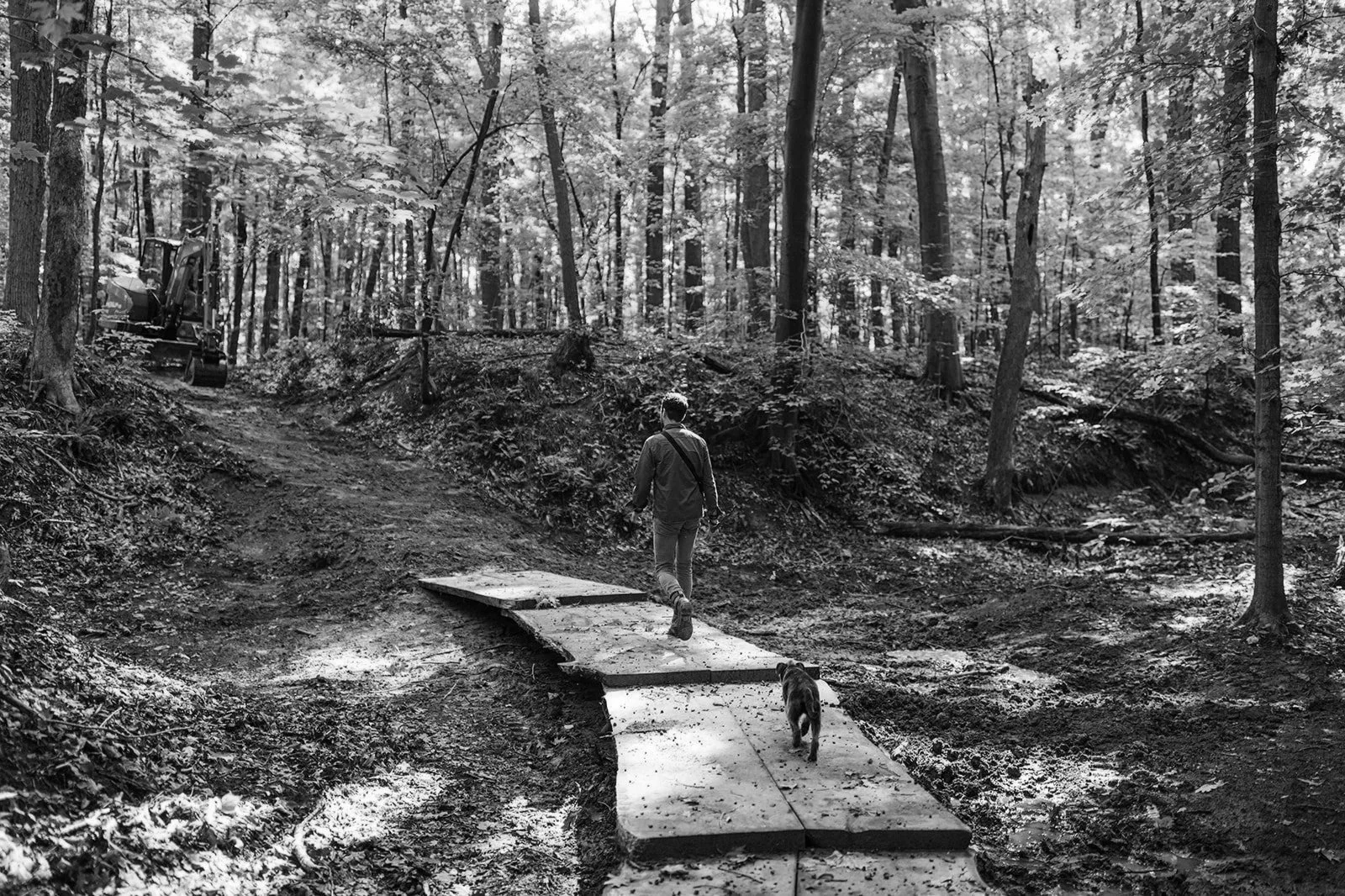
Once the initial pathway is created, larger equipment such as bulldozers or excavators were used to further clear out the area and create more defined trails. However, it's important to note that using heavy machinery in a wooded area can also have environmental impacts, so it's important to work with a professional who has experience in land management and conservation. On our property, I consulted with an expert with a degree in Forest Ecology and Ecosystem management. He has also assisted me in removal of non-native plant life through controlled burns.

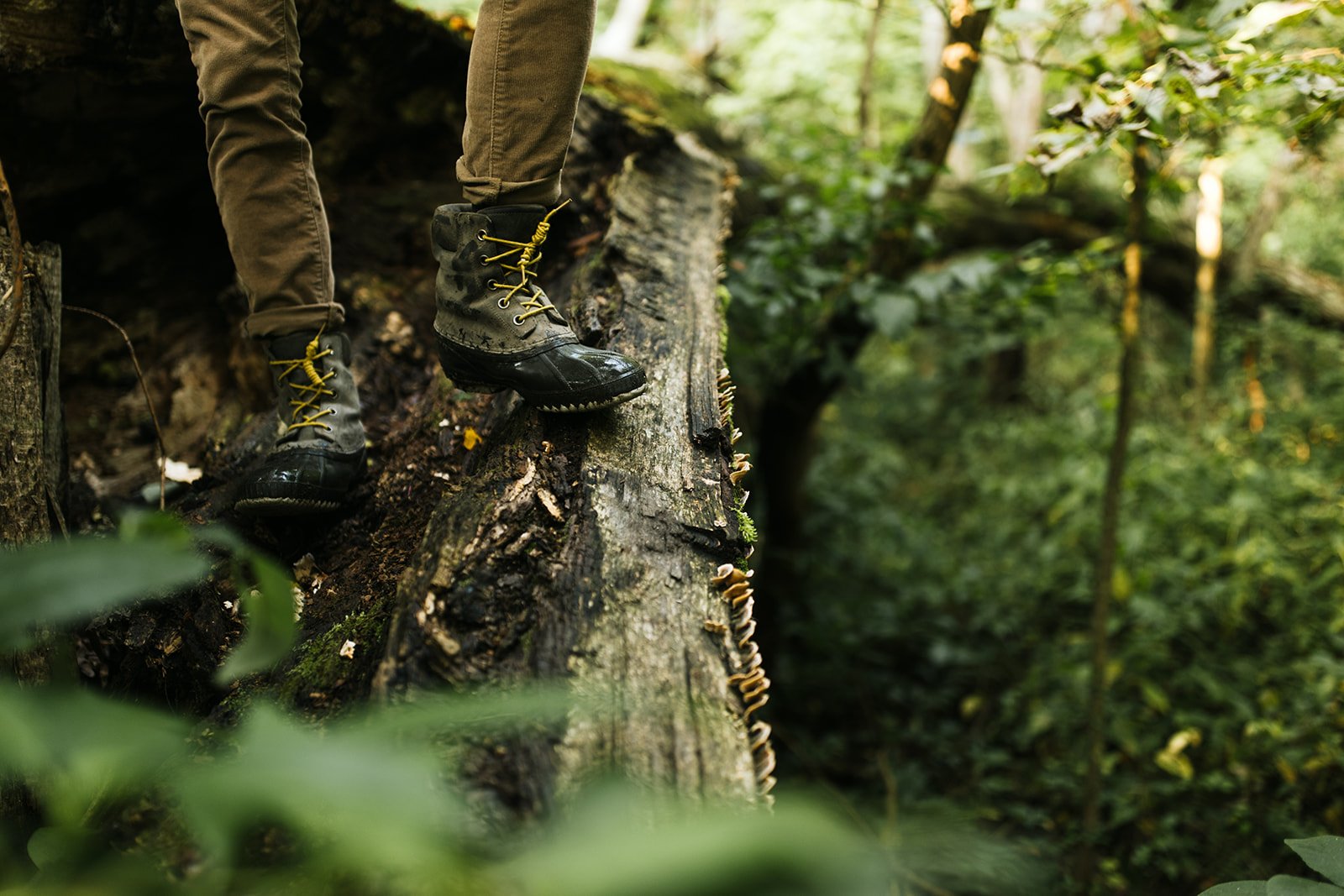
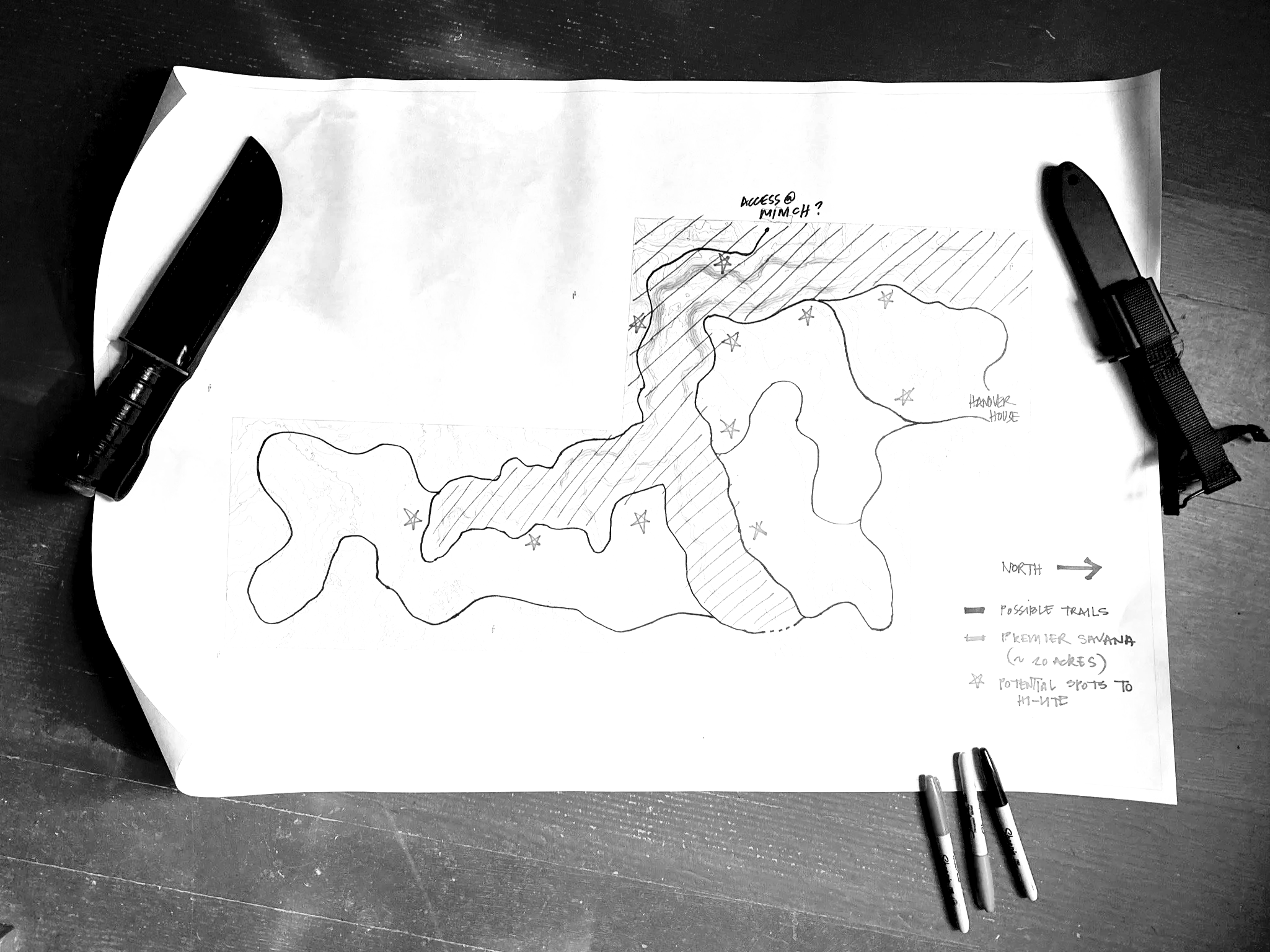
To design the trails, I began the way I begin many of my Interior Design jobs…with a sketch. This allowed us to have a “path-forward” as we removed and managed the vegetation and fallen trees. When possible the fallen trees were left on the forest floor, to provide housing for the birds, reptiles and animals. We are now also propagating mushrooms in some on the logs that we collected.

In the case of physical bridge-building, this might involve planning, designing, and constructing a structure that can span a gap or connect two areas. In the case of social bridge-building, it might involve reaching out to new people, finding common ground, and working towards shared objectives. In both cases, there can be challenges to overcome, such as logistical hurdles or differences in opinion. However, by focusing on shared goals and finding ways to work together, bridges can be built that create new connections and opportunities.

In addition, boardwalks can make trails accessible to a wider range of people, including those with disabilities, young children, or the elderly. This helps to promote inclusivity and allows everyone to enjoy the beauty and benefits of spending time immersed in nature.