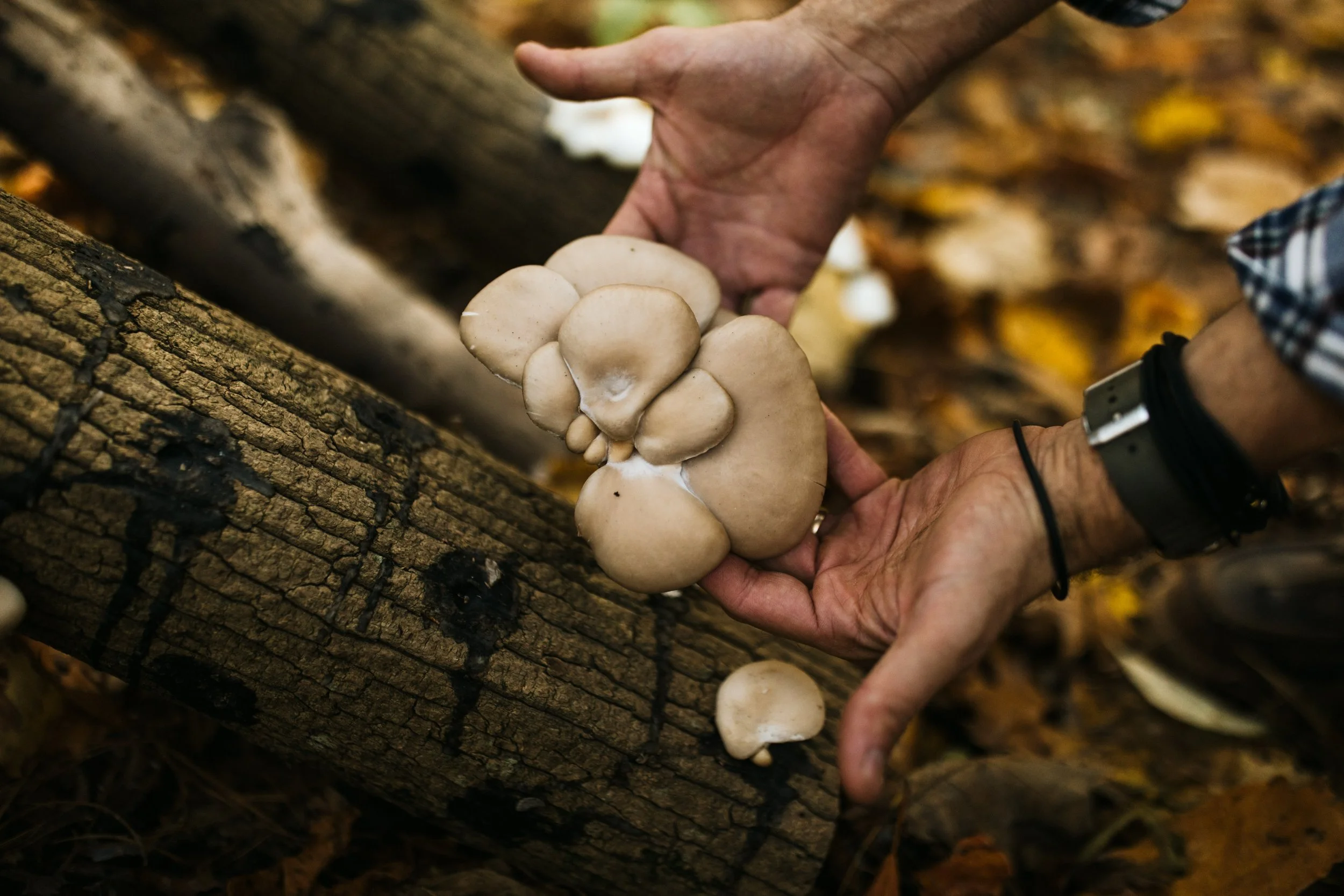
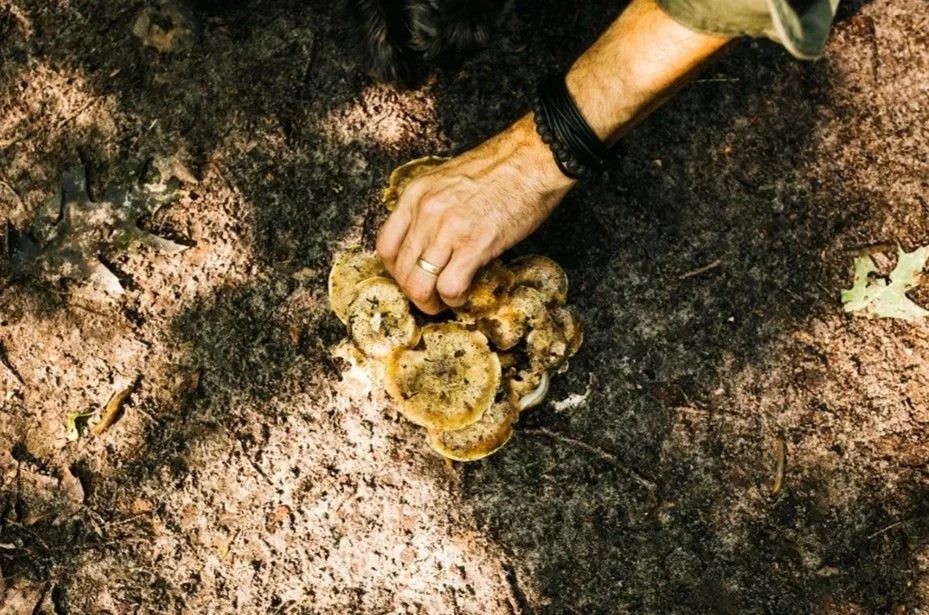
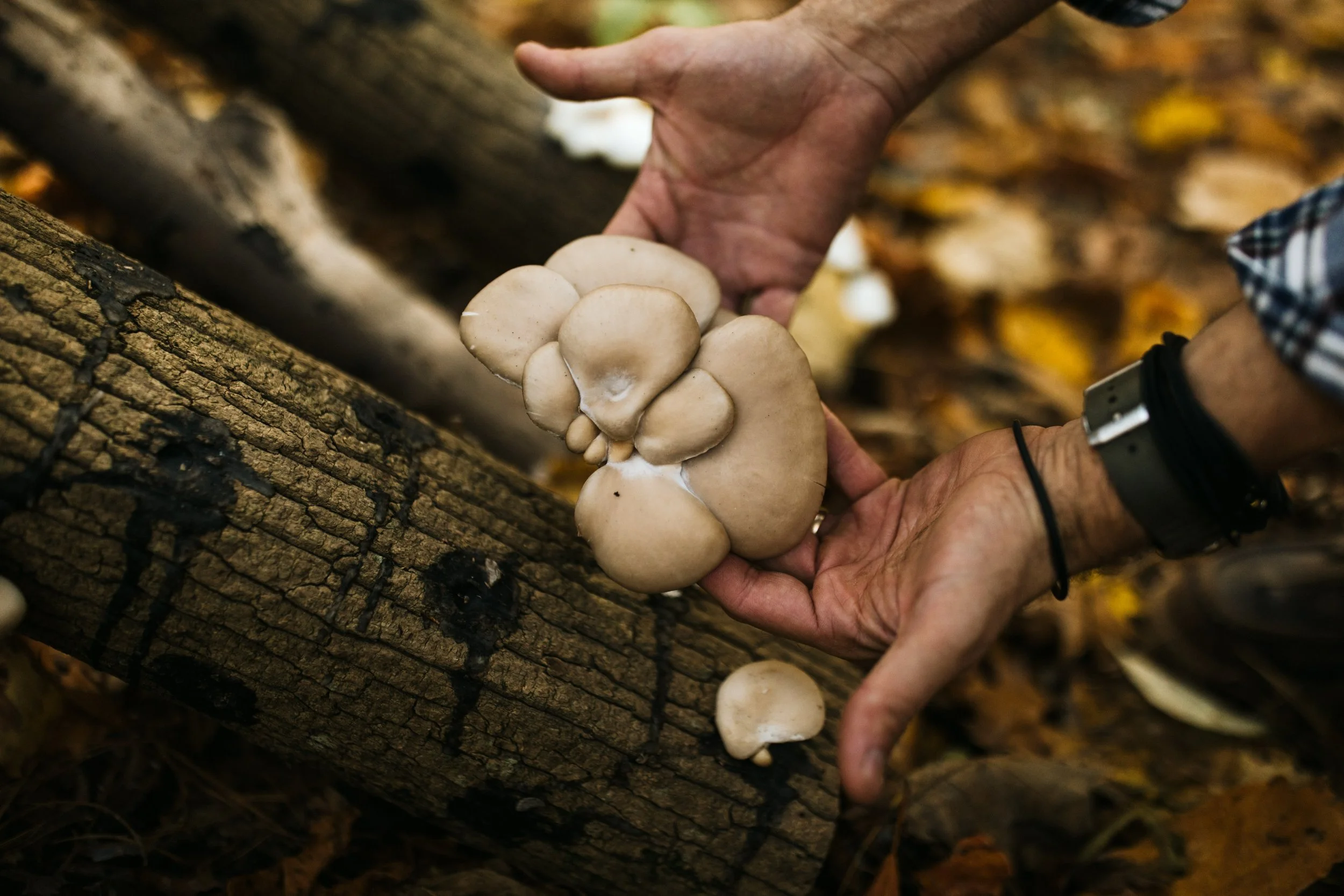
On our foraging walks, we realized there was an entire hidden world unfolding right beneath our feet. Not every mushroom was edible, but many were—some perfect for the table, others better suited for teas. Along the way, we began meeting familiar faces like Chicken of the Woods, Hen of the Woods, Puffball, Lion’s Mane, and Turkey Tail.
Wild MUSHROOMS
lion’s Mane
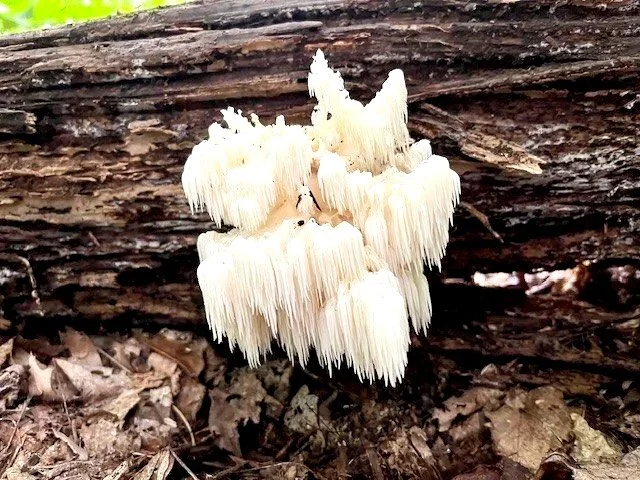
Lion’s Mane is a unique, shaggy white mushroom that looks a bit like a cascading pom-pom. It has a mild, slightly seafood-like flavor and is often used in cooking as well as teas. Lion’s Mane is also well known for its potential cognitive and nerve-supporting benefits, which has made it especially popular in wellness circles.
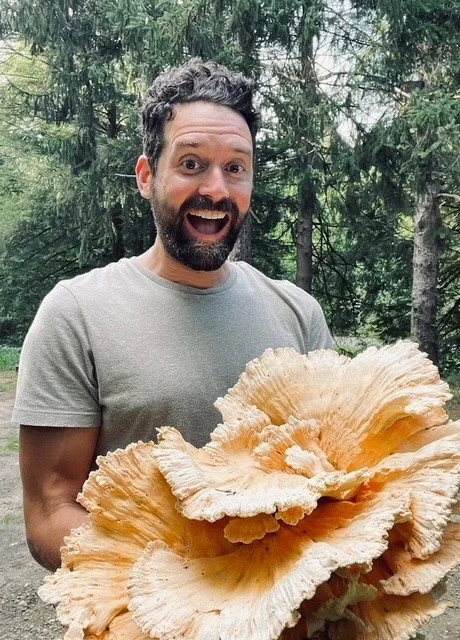
chicken of the woods
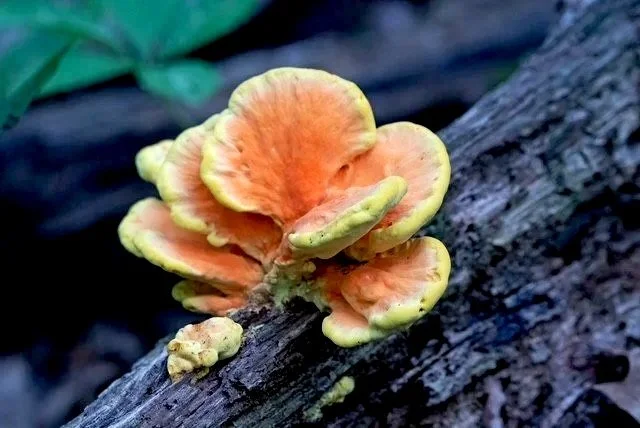
Chicken of the Woods is a bright, shelf-like mushroom that grows on trees and is hard to miss thanks to its bold orange and yellow color. When cooked, it has a texture and flavor that’s surprisingly similar to chicken, which is how it got its name. It’s a favorite among foragers and works well sautéed, roasted, or added to soups and stews.
Turkey Tail
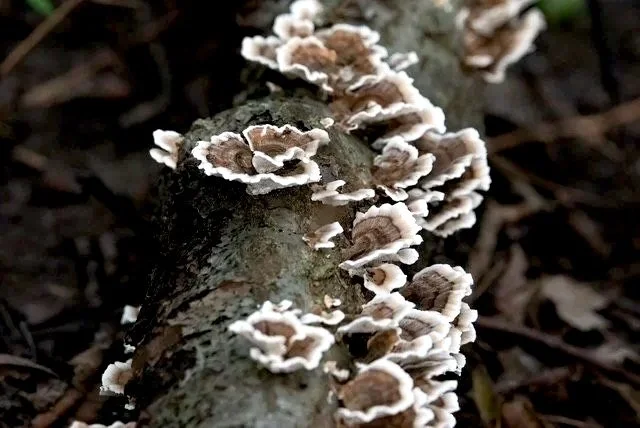
Turkey Tail is a thin, fan-shaped mushroom with colorful rings that resemble a wild turkey’s tail. It’s not typically eaten as food, but it’s commonly used in teas and tinctures. Known for its long history in traditional wellness practices, Turkey Tail is especially valued for its immune-supporting properties.
Cultivating Mushrooms
〰️
Cultivating Mushrooms 〰️
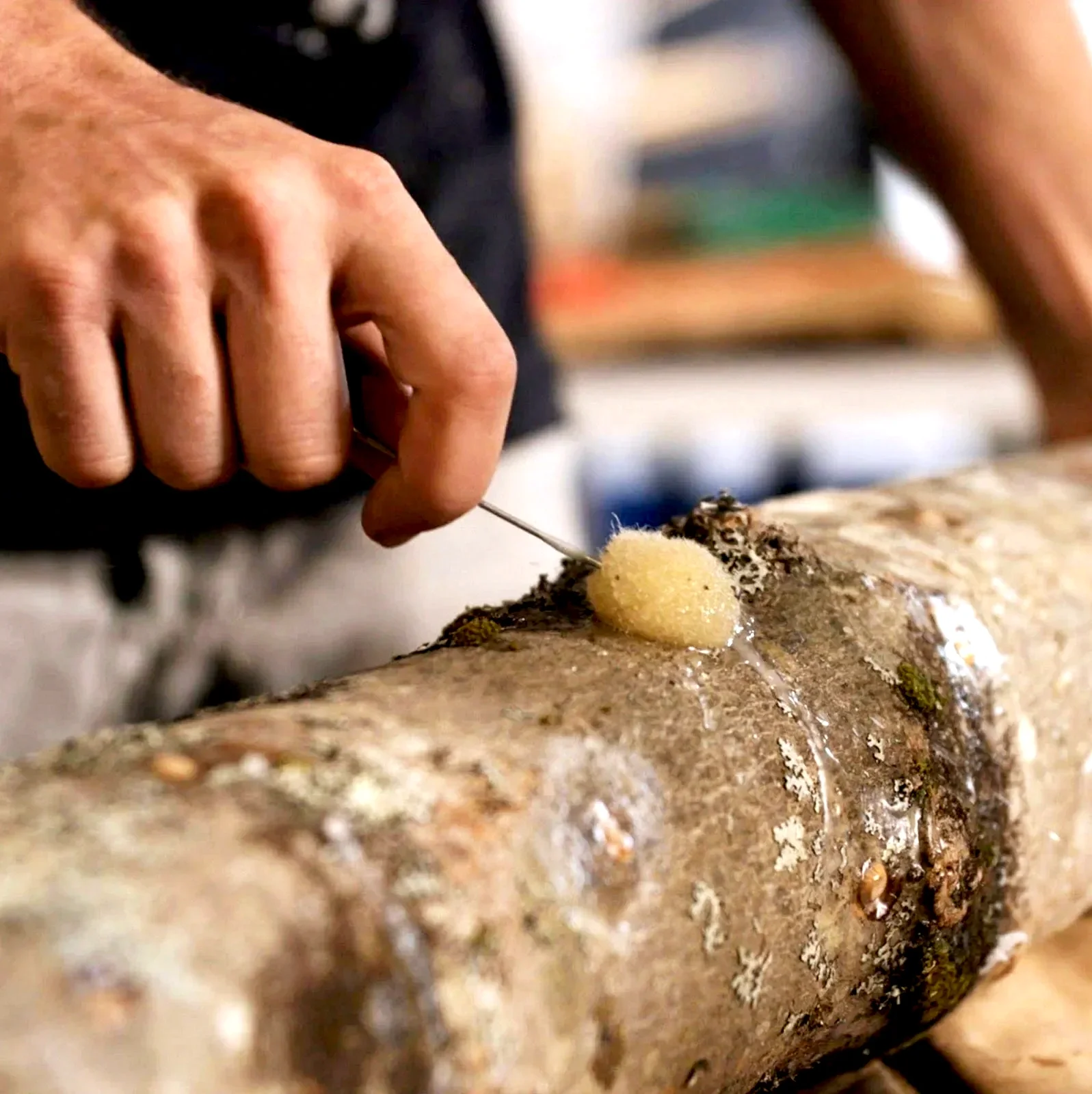
It didn’t take long to notice that the forest seemed perfectly suited for growing mushrooms, which made us wonder what might happen if we tried cultivating them ourselves. As we dug into the research, it became clear that mushroom farming was surprisingly approachable—and something that could continue to reward patience and care for years to come.
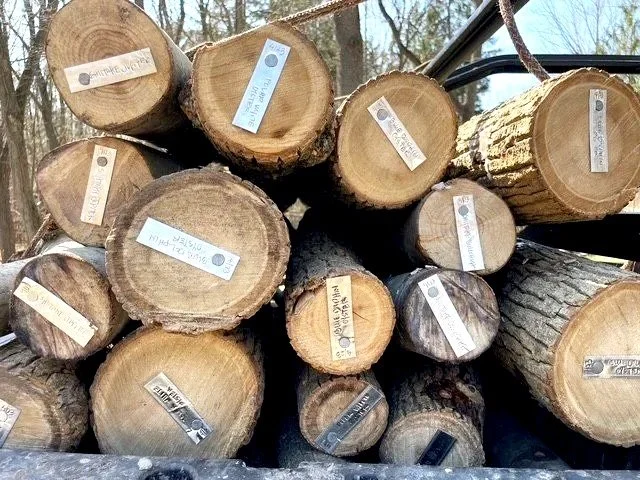
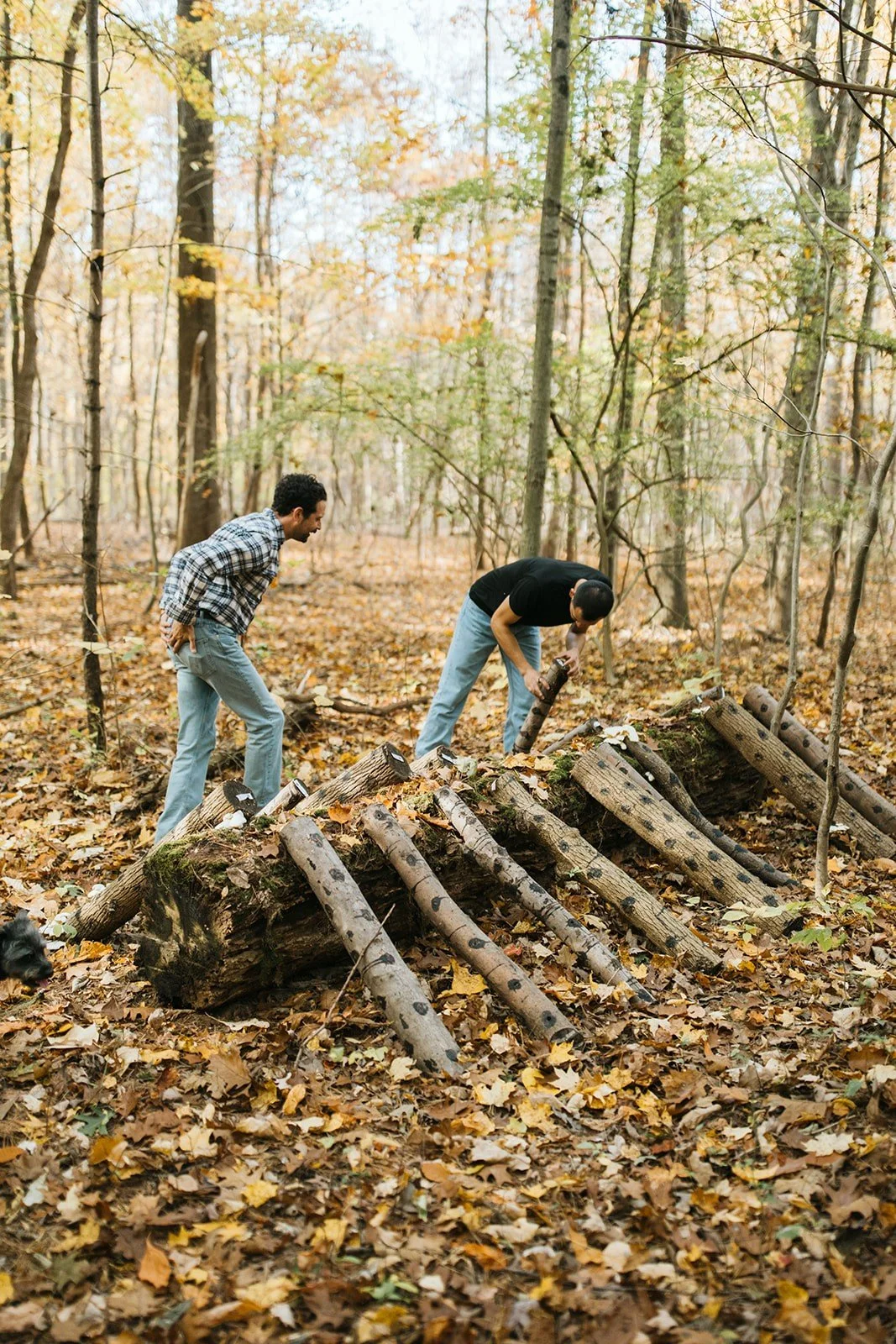
The process itself was fairly simple, though it did take time and a bit of care to ensure a successful harvest. We began with freshly cut logs, about 3–6 inches in diameter, choosing each species based on the specific mushrooms we wanted to grow—since different mushrooms prefer different trees. The logs were then cured for several weeks before being drilled and inoculated with mushroom spores. Finally, each hole was sealed with wax to lock in moisture and protect the logs from contaminants.
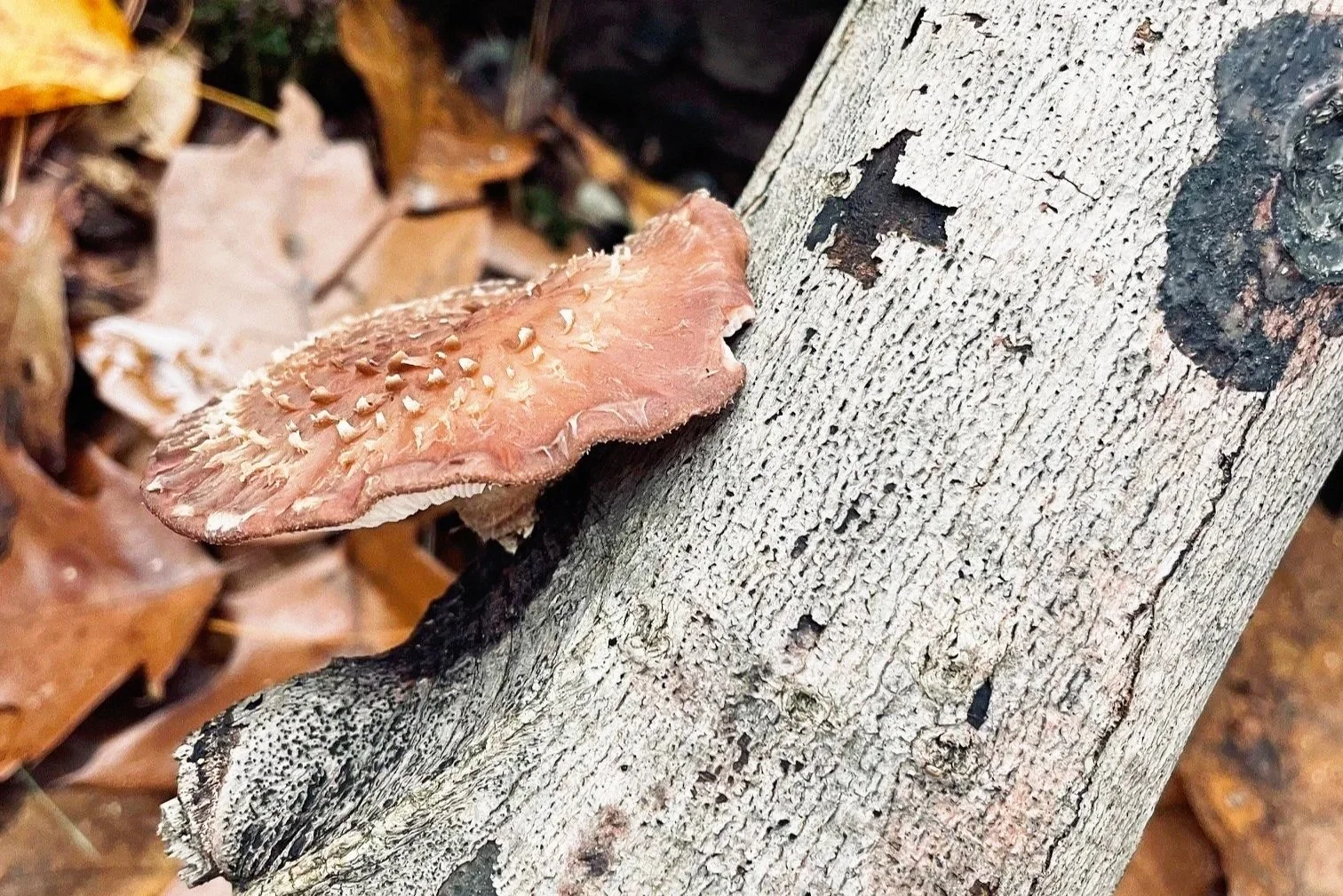
We cultivated a variety of mushrooms, including oyster, shiitake, lion’s mane, and maitake. Once the logs were inoculated, they were placed on the forest floor in cool, shady, damp conditions and left to do their work. The wait was part of the process—sometimes several months, sometimes more than a year—but the eventual harvest made the patience worthwhile.